How real-time monitoring turns HVAC failures into predictable, preventable events
It’s the hottest week of the summer.
Your air conditioner has been running all day, doing its job—until suddenly it isn’t.
The house starts warming up. The vents are blowing, but the air isn’t cold. The thermostat says everything is “on,” yet the temperature keeps climbing.
By evening, the system shuts down completely.
Now you’re calling for emergency service, wondering how something that felt fine hours ago could fail so suddenly.
The truth is—it didn’t.
HVAC Breakdowns Almost Never Happen Without Warning
Most homeowners believe HVAC systems fail randomly. One day they work, the next day they don’t.
But in reality, HVAC failures almost always show early warning signs—days or even weeks before a full breakdown occurs.
The issue isn’t sudden failure.
The issue is invisible deterioration.
Before a mid-summer breakdown, systems commonly experience:
- Longer-than-normal runtimes
- Gradual loss of cooling performance
- Increased electrical load on motors and compressors
- Subtle airflow restrictions
- Rising internal heat stress
These changes compound quietly. Comfort slowly degrades. Energy usage increases. Internal strain builds—until the system reaches a tipping point.
By the time homeowners notice something is wrong, the damage is already underway.

Why Homeowners Miss the Warning Signs
HVAC systems are hidden by design.
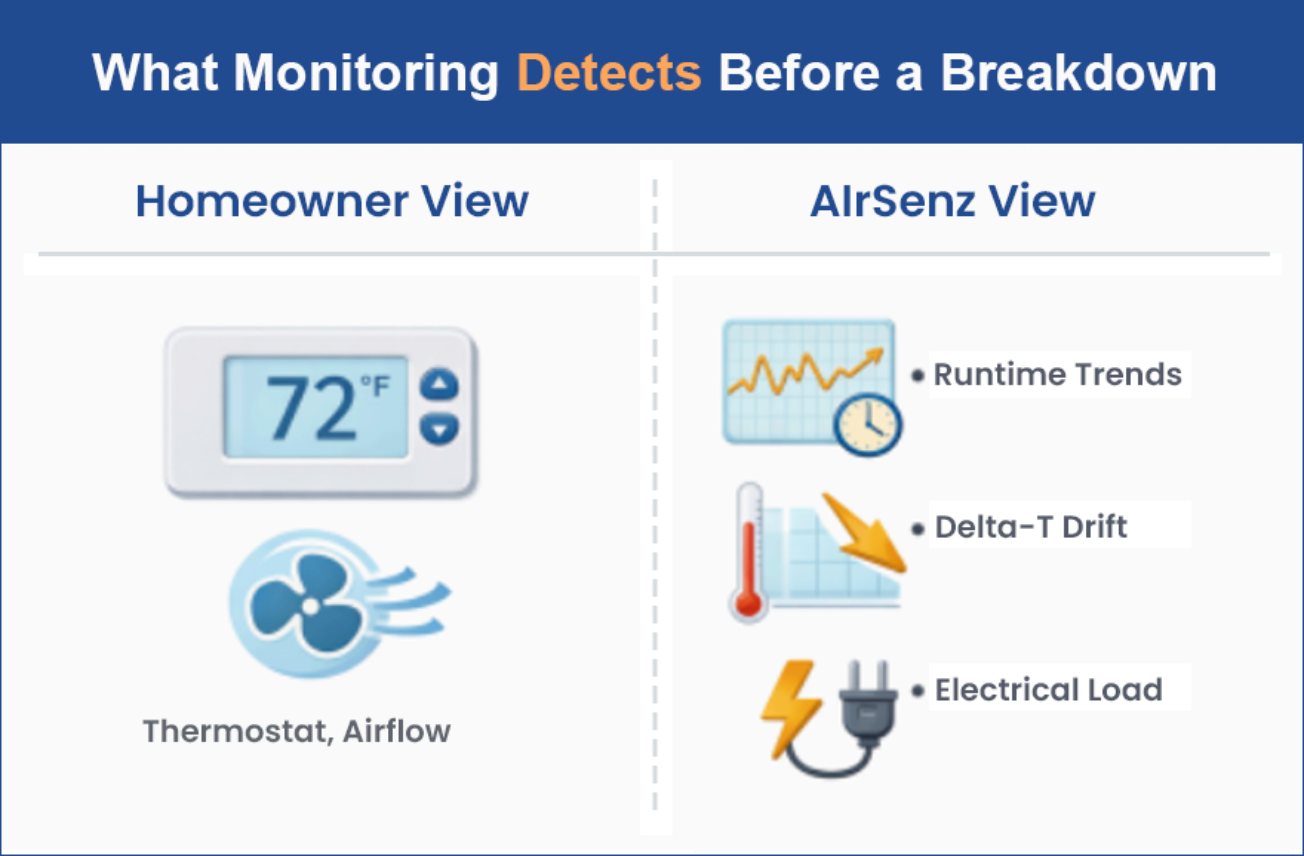
They live in attics, closets, basements, and crawlspaces. Homeowners rely almost entirely on a thermostat and airflow to judge performance.
Traditional thermostats don’t show:
- System stress
- Efficiency degradation
- Component overuse
- Abnormal operating pattern
So when a system runs inefficiently—but still runs—it feels normal. Until it doesn’t.
This is why HVAC breakdowns feel sudden, even though they rarely are.
What Monitoring Sees That People Can’t
A real-time HVAC monitoring platform like AirSenz changes this dynamic.
Instead of waiting for failure, AirSenz continuously measures how the system operates and establishes a baseline unique to each home. When performance begins to drift, those changes are detected early.
AirSenz identifies patterns such as:
- Abnormally long runtimes before reaching the set temperature
- Temperature delta drift signaling reduced performance
- Unnecessary heat strip activation
- Airflow and blower irregularities
- Electrical load changes indicating component strain
These are not alarms after something breaks.
They are early indicators that something is starting to go wrong.
What “No Surprise” Actually Feels Like
When an HVAC system is monitored, failures stop being emergencies.
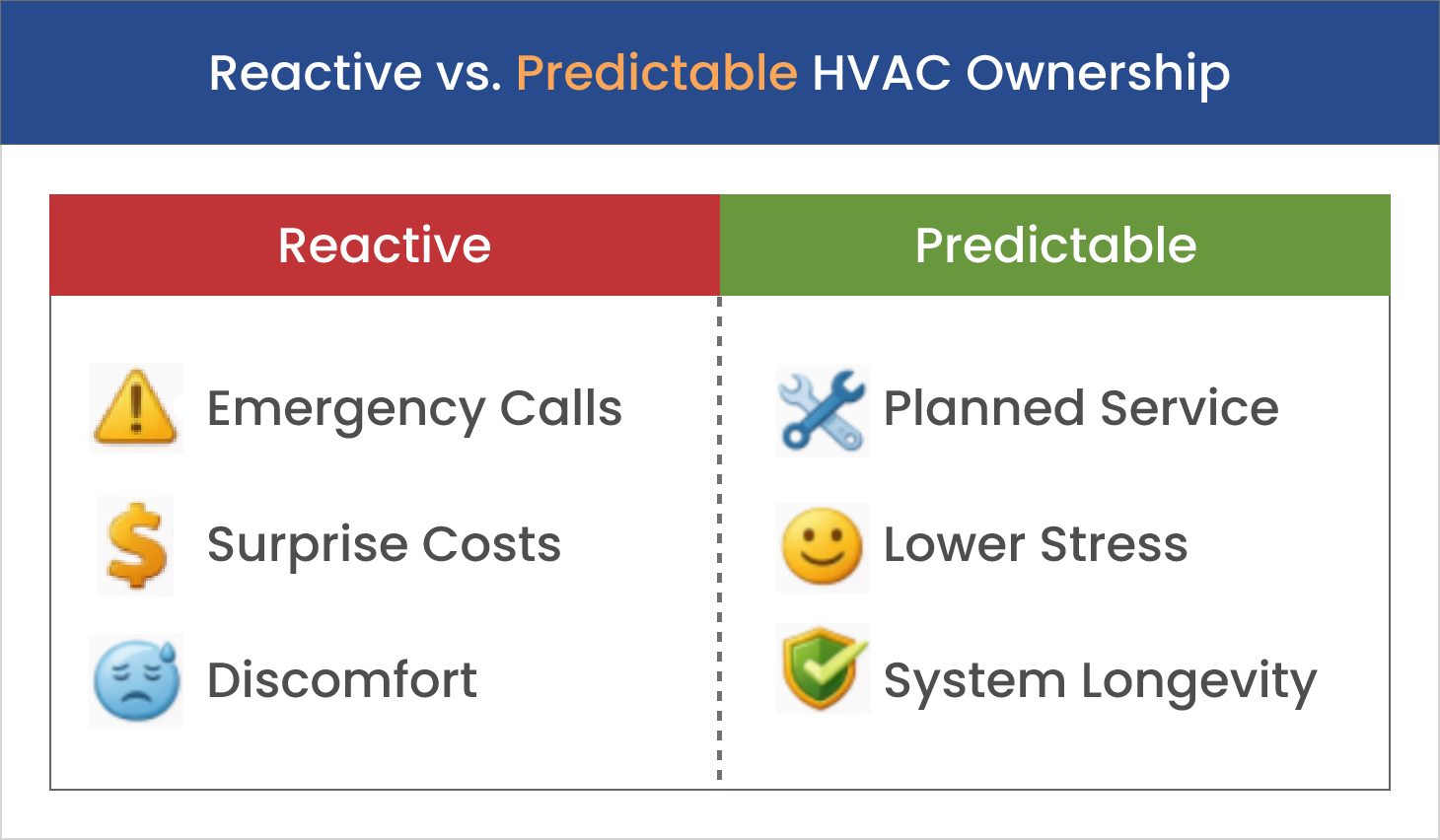
Instead of:
- A breakdown on the hottest day of the year
- Weekend or after-hours service calls
- Rushed repair decisions under stress
Homeowners experience:
- Early notifications before comfort is lost
- Planned service during normal business hours
- Smaller repairs instead of major component failures
- Confidence that their system is being watched continuously
The experience shifts from reactive to proactive.
Predictability Is the Real Upgrade
HVAC systems don’t fail because homeowners neglect them.
They fail because homeowners can’t see what’s happening inside them.
Monitoring transforms HVAC ownership:
- From guessing → knowing
- From reacting → planning
- From surprise → control
When performance issues are caught early, breakdowns become rare and manageable instead of disruptive and expensive.
The Bottom Line
Surprise HVAC breakdowns aren’t inevitable. They’re a visibility problem.
With real-time monitoring, early warning signs are identified long before a hot summer day turns into an emergency service call.
The result isn’t just fewer repairs. It’s peace of mind.
About Intellicair
Intellicair is the company behind AirSenz, a next-generation HVAC monitoring platform designed to make home comfort smarter, more reliable, and more transparent. Built by HVAC professionals with real field experience, Intellicair blends advanced sensor hardware with intelligent software to help prevent unexpected failures and lower long-term system costs for homeowners and contractors alike.
About AIrSenz
AirSenz is Intellicair’s flagship product — a real-time HVAC monitoring and diagnostics platform powered by a private, HVAC-trained AI engine. AirSenz continuously measures system performance, detects emerging issues, and provides clear, actionable insights long before a breakdown occurs. Through seamless integrations with contractor tools like ServiceTitan, AirSenz delivers proactive service, fewer callbacks, and true peace of mind for homeowners.